



SoftBank wants explicitly to be an AI company. Its engineers are building the means to do it, and its parent is borrowing at record levels to fund a bigger bet on AI. What is their plan, how replicable is it for others to follow, and how well would it survive an AI market downturn?
For most of the past decade, operators have been struggling with the same question: what do you become when connectivity is a commodity? We’ve seen activity in network APIs, enterprise private networks and edge computing, but none so far has materially changed national-scale operators’ accounts.
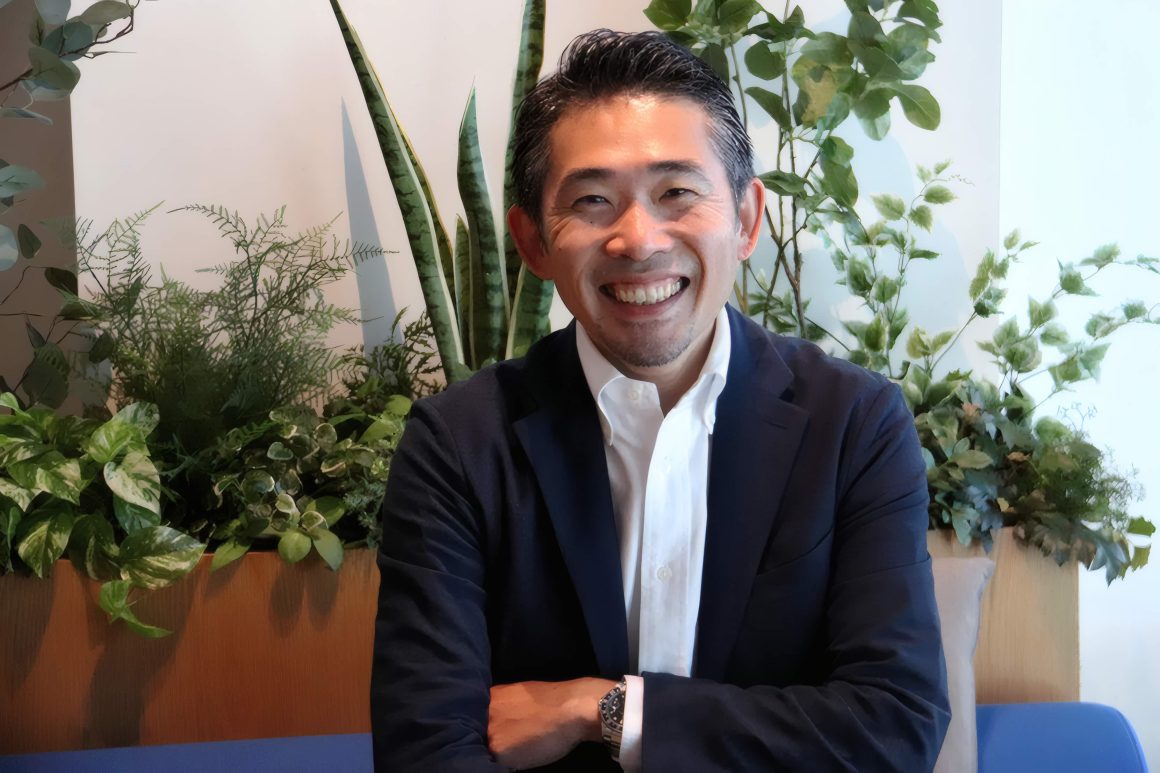
SoftBank has given a stronger mission statement than most. “We want to invest to AI. So no more telecom,” Ryuji Wakikawa, Vice President and Head of SoftBank’s Research Institute of Advanced Technology, told TelcoForge recently. “That’s our management thing.”
TelcoForge spoke to Wakikawa and a group of colleagues during a recent visit to the UK. Beyond simply a mission statement, they’re working to make it a reality. They have three main pillars to accomplish this:
- A foundation model for running networks,
- A software stack for turning GPUs into a neocloud, and
- A plan to run the radio network itself on GPUs
They are backed by a corporate culture of making big pivots, which helps considerably. Softbank Group founder Masayoshi Son has made some of the largest bets in the history of technology investment – for good or ill. And, while this overt gambling is unlikely to win friends among the risk-averse in most telcos’ investors, doing nothing is placing a bet as well.
Model Behaviour
So, pillar one: for roughly two years, the company has been building what it calls a Large Telecom Model (LTM). This is an AI foundation model trained on its own network operations data, something that OpenAI can’t imitate.
SVP for Softbank Telecom America Dr Rajeev Koodli is leading work on this at SoftBank’s California site. He described the training corpus as data from around 200,000 cell sites over 380 days. The objective was firstly to create a single model with a system-wide view of how the network behaves, including the demographic and mobility patterns captured in that data. That creates a base that can be fine-tuned for specific jobs, such as configuring cell sites or predicting KPIs.
“Operators have so much data, private data, which is not visible to the frontier models outside,” Koodli pointed out. A general-purpose model can read a 3GPP specification, but it can’t know how a particular network behaves on a wet Tuesday in Osaka.
SoftBank first announced the LTM in March 2025, and at the time reported that expert staff judged base station configurations generated by a fine-tuned version to be 90% accurate. Fine-tuned use cases are now in trials with SoftBank’s own wireless planning and operations teams. Koodli commented that the company has “made strides”, but “there’s a lot of room” before the efficiencies are realised at scale.
However, that’s in part because of Softbank’s approach to making efficiencies. “People add AI on top of existing workflows and tool sets,” Koodli said. “We are trying to take a more native approach. So we collect data and see how we can replace an existing workflow with AI rather than adding on top of that.”
Overseas Excursions
The newest element is an attempt to take the LTM outside SoftBank. SoftBank had met another operator that same morning to test whether an “open LTM” could work in its environment. The open version is trained not on SoftBank’s own records but on synthetic data derived from them. The idea is to preserve the statistical relationships in network data while removing anything confidential, so that the resulting model is shareable.
It seems a little counter-intuitive that a model trained on, e.g., a wet Tuesday in Osaka should work well for networks in Anchorage or the Maasai Mara. Koodli was sanguine though, thanks to the kind of market strangleholds operators continually try to beat.
“There are only a few vendors – Ericsson, Nokia, Samsung,” he explained. Because of the uniformity of purchases, data schemas and operational workflows look similar from one operator to the next. Wakikawa put it more simply: “If someone does operation A, any operator in the world does the same thing.”
Red Hat’s Ignacio Gonzalez, also on hand, backed the broader trend. Operators, he said, increasingly want smaller domain models rather than the “huge monsters” of frontier AI, but the hard part is getting “telco-quality data. It’s easy to say, more difficult to get.” SoftBank’s synthetic approach is effectively a method to manufacture that data for operators who either don’t want to use their own, can’t, or want a second opinion.
If that portability trial works, SoftBank can become a supplier of operational AI services to the industry. That is a more modest business than becoming an AI cloud. However, it pays for itself domestically through lower operating costs, and then any additional income is a benefit.
Token Effort
SoftBank’s broader ambition is to become what Wakikawa calls an “AI token provider,” a company whose product is AI output delivered to customers, not bandwidth.
However, owning GPUs is not the same as running an AI cloud. SoftBank discovered this when it first deployed Nvidia A100s. With no cloud software for GPU infrastructure available, the only thing it could sell was bare metal. Hyperscalers had rich software for running GPUs, but only inside their own clouds.
“It’s a vertical integration,” Wakikawa said. “If we’re going to work with Google or AWS, we have to buy their services. But what we need is that we have a GPU sitting in our infrastructure. We just need the software for monetising that GPU.”
So Koodli started recruiting in the Bay Area in late 2024, mostly engineers from Google Cloud, and design on that software began in spring 2025. The result, Infrinia AI Cloud OS, was announced in January. It turns rack-scale GPU systems into a multi-tenant cloud, offering Kubernetes and inference as services. The hard engineering problem, Koodli said, is assigning individual servers or GPUs from a rack to different customers with physical separation between them, at close to raw hardware performance.
SoftBank opened a beta GPU cloud service built on Infrinia in May, with commercial launch scheduled for October. In July it went further, forming SB Neo, a US–based neocloud owned jointly with its parent, SoftBank Group, which plans to scale towards 10 gigawatts of capacity.
Capacity Gains
The third pillar is AI-RAN: running the radio access network on the same GPU infrastructure. Wakikawa’s reasoning is mainly financial; If SoftBank’s investment now goes into GPUs, the radio has to follow. “There’s a natural move,” he said.
He made two arguments for this. AI can improve radio performance, for example by predicting where a user is about to move and steering the beam accordingly. “All the operators spend enormous money on the spectrum,” Wakikawa said. “If we have a 5%, 10% better spectrum efficiency, it’s going to be huge.” What’s more, it attacks the industry’s chronic utilisation problem. Radio networks are dimensioned for peak times, on dedicated hardware which would otherwise be idling. “If the GPU is available at the night, there’s so many demands on GPU,” he said. “We can potentially monetise unused capacity.”
Shinta Sugimoto, who works on the company’s AI-RAN and GPU cloud programmes, described the orchestration layer that makes this work. It collects metrics across GPU clusters spread around Japan, then places AI workloads based on where resources are free and, notably, where renewable energy is available at that moment. The same software layer runs in SoftBank’s large data centres, so a customer could train a model centrally and serve it from the distributed edge.
This is the part of the strategy furthest from reality. At its May results briefing, SoftBank said AI-RAN was still “in the preparation stage”, with no large sums yet in its investment plans.
Remodelling
Wakikawa pointed out that, once again, this was a financial question rather than a technical one… which is why it’s hard to change. He described a mobile operator as mostly an infrastructure construction company, which then amortises its assets over six or seven years. “We are building the towers. That’s our business.”
However, GPU infrastructure recoups its cost far faster, at higher margins, and to a different set of customers.
There is a difficult trade-off to make, too. Offering the capacity to hyperscalers is a stable market but with thin margins. Selling tokens to AI start-ups pays a lot more, but “they may not exist next year.”
Koodli argued that this is where Infrinia earns its keep. Software lets an operator spread capacity across hyperscalers, AI labs and enterprises rather than wholesaling it to one buyer. It also extends the life of depreciating hardware. “Customers at the end of the day will not say “I need this particular GPU,”” he said. “They’ll say, “I need this job done.””
More broadly, Wakikawa sees AI offering a kind of renaissance for the network too. A robot waiting on inference cannot move until the response arrives, he pointed out.
“The pipe is getting important. And that’s where we can monetise our connectivity.” Asked whether all this amounted to a gamble, he rejected the premise. SoftBank, he said, has always moved to wherever growth was, from software distribution to broadband to mobile. “I don’t think we see this as a gamble. Natural evolution.”
Constructive Criticism
Wakikawa may not call it a gamble, but the rest of the industry probably will, and the reason SoftBank is willing to take it is the same reason most operators are not. Connectivity is commoditised, Wakikawa noted, and he was equally blunt about the last generation: “After the kind of failure of 5G, we probably needed some change.”
Operators that stay where they are face a slow squeeze rather than a sudden collapse. That may feel safer to risk-averse decision makers, which is precisely why it is dangerous. The alternative to a risky bet on what comes next is a steady slide towards being, in Wakikawa’s phrase, a construction company that builds infrastructure for other people to monetise.
Beyond the technology, SoftBank has an asset that most other telcos don’t: an owner whose career has been built on making big technology bets.
Recorded Delivery
Masayoshi Son is recognisably behind the wheel of this corporate change. It is hard to read Wakikawa’s account of SoftBank’s history – always moving to the fastest-growing segment – without hearing the founder in it.
Son has a record of being right about platform shifts and wrong about price, timing and leverage. His wins have been enormous. A $20 million investment in Alibaba in 2000 was worth $60 billion when it listed in 2014. The 2006 purchase of Vodafone Japan created the operator TelcoForge interviewed. Arm, bought in 2016 and floated in 2023, is now by one estimate worth more than SoftBank Group’s entire market capitalisation.
On the other hand, the losses have been staggering too. Son’s net worth reached about $78 billion at the peak of the dot-com bubble, and he lost around $70 billion when it burst, while SoftBank’s market value fell from $180 billion to $2.5 billion.
SoftBank put more than $10 billion into WeWork, which filed for bankruptcy in November 2023. Meanwhile, in early 2019, the Vision Fund sold its entire Nvidia position for a $3.3 billion gain, shares that were worth more than $150 billion by mid-2024. In November 2025, SoftBank sold its entire remaining $5.8 billion Nvidia stake, not to reduce risk but to double down on OpenAI.
On 1 October, SoftBank Group paid the final $10 billion instalment of a $30 billion follow-on, taking its total investment in OpenAI to $64.6 billion for a stake of about 13%. Paying for it has required a lot of borrowing. In September the Group raised $11.1 billion in the largest high-yield corporate bond sale on record. It also raised a loan secured against its Arm shares to $25bn and took a separate $10 billion loan against the OpenAI stake.
This is not reckless by SoftBank’s own standards, but there’s a familiar pattern to the activity. A large share of the Group’s fortunes now rests on one private company, financed with debt secured on assets whose value moves with the AI market.
Crunch Time
SoftBank’s strategy is several bets layered on top of each other, and they are not equally exposed to risk. If we are coming into an “AI crunch”, some would survive a sharp AI correction comfortably… but not all.
The timing of SoftBank’s move into neocloud services is unfortunate. In October, CoreWeave fell about 36%. Gartner predicted that more than 80% of neocloud providers could cease to operate independently by 2030, and that over $3.5 trillion of AI infrastructure spending could face impairment.
OpenAI is really the elephant in the room. The Financial Times reported this month that its annualised revenue was $50 billion, $20 billion less than previously thought. OpenAI said in November 2025 that it expected losses through 2028, including $74 billion in operating losses in that year alone. SoftBank Group’s shares fell 6.9% in Tokyo on 23 October as investors questioned the payoff.
On the other hand… demand for compute still appears to exceed supply, and a CoreWeave investor has argued that OpenAI’s compute contracts are worth more today than when they were signed, so capacity could be resold. What October looks like, so far, is a credit test for the companies financing AI infrastructure rather than proof that AI demand has collapsed. But a serious correction is now a possibility.
Game of Risk
Realistically, if there is some kind of crunch there’s more risk for SoftBank at group level than for the telco itself – although trouble at the parent is never good news for the operator underneath it, whatever the legal separation.
SB Neo might struggle. It would enter the US neocloud market just as that business model is being repriced as a credit risk, and its scale depends on the Group’s 10GW infrastructure pipeline. This is the part of SoftBank’s strategy that looks most like the companies currently being sold off.
The domestic GPU cloud is better protected, because its pitch is sovereignty. SoftBank says the service is aimed at customers who face restrictions on moving data overseas, and that demand is driven by policy as much as by AI enthusiasm. Japan’s government is collaborating with NVIDIA to procure 27,500 Nvidia Rubin GPUs for its “Noetra“ sovereign build-out – and that’s likely to be fairly price elastic if need be.
SoftBank’s LTM and AI-RAN are the best protected from any shocks because they are based on SoftBank’s own costs. A model that runs the network more efficiently, and a radio that wrings more out of expensive spectrum, are worth having at almost any GPU price, and the capabilities can be sold while the savings re retained.
One possible side-effect of a crunch… A GPU glut would strengthen Koodli’s core argument for Infrinia. Cheaper hardware lowers SoftBank’s input costs. And software that extracts value from older, depreciating GPUs becomes more valuable when the market is full of them.
Interesting Times
Group level aside, will SoftBank’s gamble pay off? It’s feasible, regardless of what happens to the wider market. The three pillars they’re looking at – the LTM, the software for neo-cloudifying GPUs and a more efficiently used network – are independent of OpenAI’s valuation.
What’s more, it follows one more element in the Son playbook: follow the emerging trends but also keep the old business. SoftBank, despite the changes and the AI strategy, isn’t looking to step away from being an operator, but it is changing its own game.
“I’ve been working this telecom industry for a long time,” Wakikawa told us. “But this is the most interesting moment being in telecom.”
But perhaps he forgot – he’s in AI now.