


NTT, NEC, and NTT DOCOMO have reported results from a trial in which multiple vehicles traveling at high speed simultaneously maintained stable millimeter-wave (mmWave) communications in the 40 GHz band — a frequency range the companies are targeting for future 6G networks.
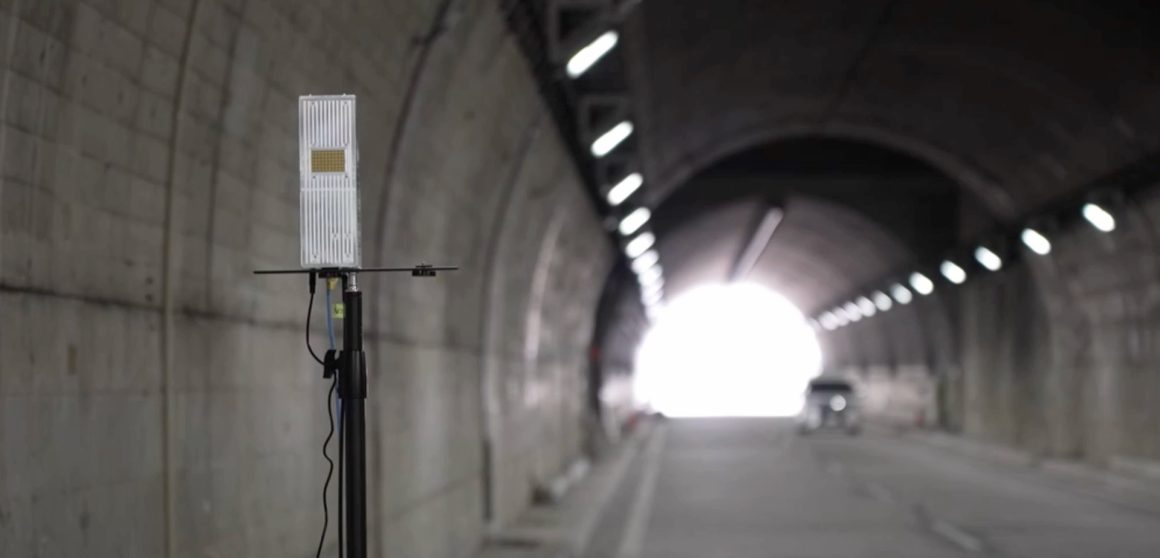
The trial, conducted in March 2026 at a full-scale tunnel test facility operated by Japan’s National Institute for Land and Infrastructure Management (NILIM), used a technique the companies describe as distributed MIMO combined with pre-compensation of transmit frequency and timing.
Two vehicles equipped with mobile terminals traveled at 60 km/h in opposite lanes of a tunnel, while three distributed base-station antennas were positioned along one side of the road at 150-meter intervals.
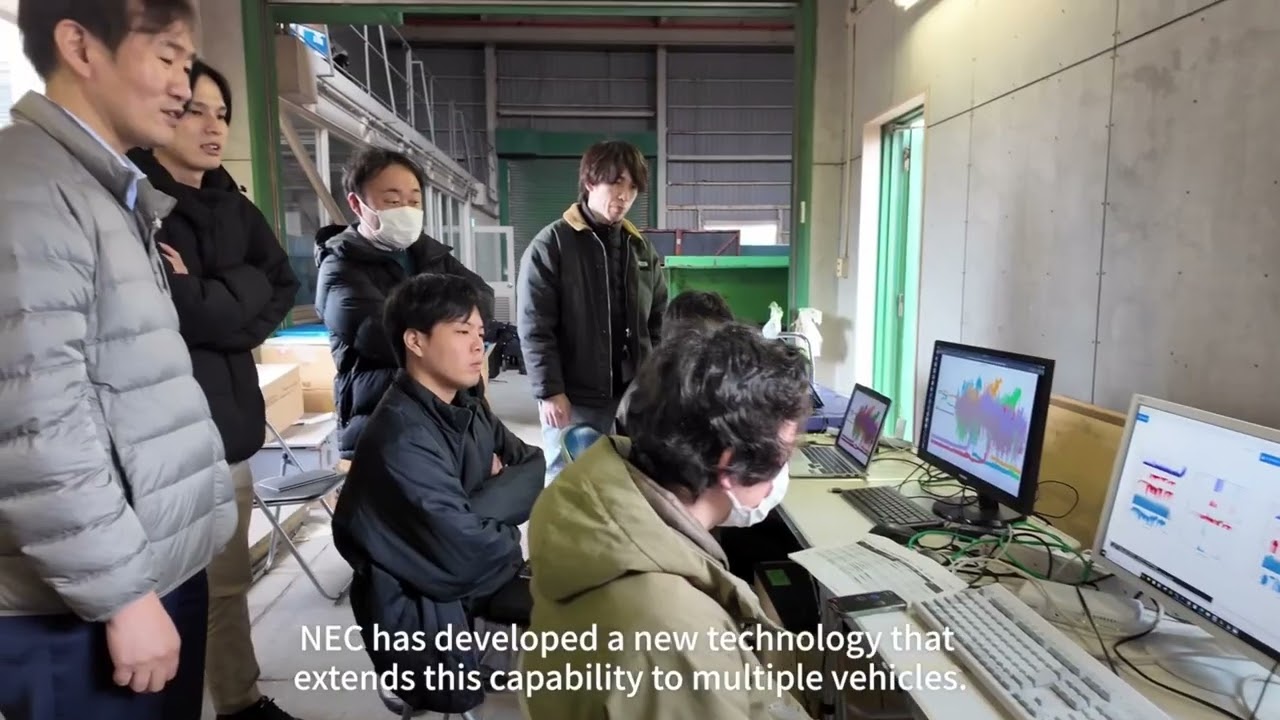
How This 6G Technology Works
Under the conventional method tested, combined throughput dropped from approximately 550 Mbps to around 110 Mbps during antenna switching, yielding an average throughput of roughly 430 Mbps over a 30-second drive.
With the proposed technique applied, throughput during antenna switching remained above 380 Mbps, and the 30-second average rose to approximately 560 Mbps — a 47% improvement. The 5th-percentile throughput value in the cumulative distribution function went from 270 Mbps to 480 Mbps.
Using uplink reference signals from each vehicle’s mobile terminal, the system estimates, per base-station antenna, the appropriate transmit frequency and timing for each vehicle. It then pre-compensates each vehicle-specific signal before multiplexing them for transmission.
The companies say this approach eliminates the differences in received frequency and timing that arise during antenna switching when serving multiple moving vehicles simultaneously, thereby stabilizing high-capacity mmWave links.
Next Steps
The three companies have said they plan to conduct further trials in additional environments, including high-speed railways, conventional railways, and arterial roads. The stated goal is to support stable, high-capacity communications in future 6G deployments, with potential applications in autonomous driving and in-vehicle connectivity.
Results from the trial will be presented at Wireless Japan × Wireless Technology Park 2026, held in Tokyo from 27–29 May 2026.