



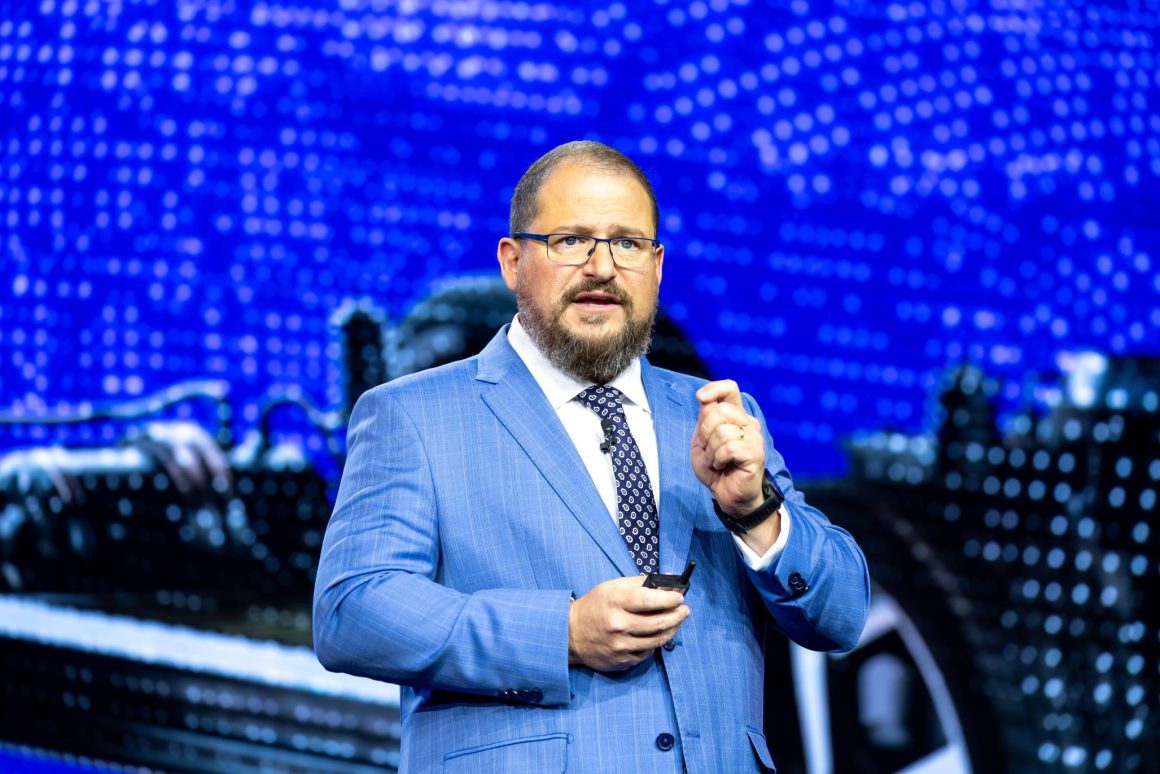
President and CEO of Qualcomm, Cristiano Amon, told investors and analysts that the American company plans to launch 6G chips in 2029 commercially and scale sales by 2030.
“6G is going to feel very different from the other Gs for Qualcomm,” he said at last week’s Q2 earnings meeting. According to Amon, the next generation of mobile connectivity “will be an AI-native network where AI reasoning, learning, and autonomous action are core functions,” creating more market opportunities for Qualcomm beyond connectivity.
“With these new capabilities, the network becomes critical infrastructure and provides the telecom industry an opportunity to develop completely new business and economic models,” he added.
Examples include context-relevant data, data insights and analytics, low-altitude aerial, terrestrial, and autonomous traffic management, drone detection and tracking, and 3D mapping with telemetry to build dynamic digital twins at scale.
Amon said that the company expects to showcase prototype demonstrations in 2028, launch the first solution early in 2029, and scale sales by 2030.
Learn more about 6G commercialisation at 6G Forge
6G Collective Effort
In March, Qualcomm and other partners announced a coalition of 58 companies to accelerate the development and global deployment of 6G.
The idea is to establish a “clear, milestone-driven roadmap” to deliver 6G commercial systems starting in 2029. According to Qualcomm, the collaboration focuses on three core architectural domains: devices, networks, and cloud infrastructure.
Companies such as Ericsson, Nokia, Chinese operators China Mobile, China Telecom, and China Unicom, Google, Amazon, Meta, and others are among the participants.
“The engagement and feedback on our 6G vision and plans from our partners, customers, and governments across the globe has been very positive, and we look forward to working across the industry to deliver on this generational opportunity,” Cristiano Amon said at the earnings meeting.
Qualcomm’s approach is not the only one in the market, though. Players such as TM Forum, NGMN and others are also providing their viewpoints, with groups such as the EU’s SNS-JU and 6G-IA having worked with other industries to clarify demand.