
Telco 2031
Executive Meeting
Decision Time
October 21-22, 2026
London
In partnership with

About
Decide, or Decisions will be made for you
2026-7 is a pivotal year for telecoms throughout EMEA. Decisions made this year will determine the identity and evolution path for telcos across the region.
This two-day executive meeting under Chatham House Rules gives you an inside look at the key choices facing telecoms service providers, the factors driving those choices today, and what they will mean for your opportunities, risk, cost, operations and customer engagement.
Confidential, interactive formats
We keep you actively engaged, with chances to ‘ask me anything’ with subject experts; interactive discussions and debates, all under Chatham House Rules.
Networking is boosted by co-locating with 6G Forge: Commercialising 6G, bringing together honest and nuanced conversation on the commercial outcomes desirable, probable or otherwise that 6G should bring to end users and telcos.
Attendance
Attendance is principally for C-level professionals across the spectrum of mobile, broadband, satellite, MVNO, wholesale, private and alternative networks, infrastructure and datacentre providers, government and regulators. Most attendance is by invitation, but if you would like to join, contact us or register here:
Day One - 21 October
8:30 am - 9:00 am: Registration
Including drinks and refreshments
9:00 am - 9:15 am: The Decision Window in 2026-7
2026-7 is going to be a pivotal year in EMEA for many reasons. Between legislation; changing investment pressures and geopolitical outlook; and technical maturity in key areas, decisions made this year will have major repercussions.
9:15 am – 10:15 am: National Champion or Global Player? The Sovereignty Dilemma
Technical sovereignty plans in Europe and the Middle East are creating tensions. Operators are being asked to build sovereign infrastructure while simultaneously relying on global hyperscalers for cloud and AI capabilities. And, while national security is an important consideration, for companies who want to act as international leaders the business positioning becomes problematic.
The session explores what “sovereignty” actually means operationally for a telco, what it costs, who pays, and whether the current investment commitments are remotely sufficient.
10:15 am – 11:00 am: Consolidation in a Cambrian Explosion
J.P. Morgan has called 2026 the “year of sector consolidation.” The Vodafone/Three UK merger is complete, MasOrange is operational, the three-way carve-up of Altice France is under way, and the GSMA is lobbying hard for reformed EU merger guidelines. But consumer groups and some regulators are pushing back, arguing that consolidation reduces competition, raises prices, and doesn’t reliably increase investment.
At the same time, the array of service providers has never been more diverse; MVNOs and specialist providers for indoor, enterprise, IoT, satellite, neutral host, shared and private networks are proliferating. Does this hail a structural change in the industry, and if so what does that imply for old concepts of consolidation or competition?
11:00 am – 11:20 am: Morning refreshments
Networking and drinks
11:20 am – 12:00 am: Profitability and the Innovation Straitjacket
Boosting profits can be done in two ways; by growing revenues or by saving costs. In a time of constrained revenue growth, investing in long-term innovation can be a hard sell to shareholders looking for stable returns. How can CEOs reconcile these different forces?
12:00 am – 12:20 pm: Ask the Investor
Much of the conference’s strategic territory ultimately comes down to what investors will fund and on what terms. This session inverts the usual dynamic by putting the money side of the equation on stage and letting operator executives interrogate them.
This is your chance to put your questions. What return profiles make sense for telco transformation? Is the market pricing in the regulatory tailwinds from legislation? How does investor appetite differ between markets? Where is private equity actually looking?
12:20 pm – 1:00 pm: Commercial Innovator or Utility? Risk and the Business Model Fork
Major telecoms providers serve two masters: governments who want a well regulated utility; and investors who want returns. Increasingly we are seeing some divergent evolution paths from a similar basis. Where could and should you take your company?
1:00 pm – 2:00 pm: Networking Lunch
Join the group attending 6G Forge to digest the key lessons of the morning alongside great food.
2:00 pm – 2:40 pm: Business Success, Network Irrelevance: An Emerging Model
Most of the telecoms industry has focussed on competing based on network quality. However, a small but growing set of service providers threaten to transform the status quo. Are you equipped to respond?
2:40 pm – 3:30 pm: The Disaggregated Telco: Are There Lessons from the Energy Sector?
While there are an increasing number of alternative service providers, the core of the industry has maintained the same fundamental business structure for generations. Is it time for a change, and what can we learn from sectors in a similar position?
3:30 pm – 4:00 pm: Networking Break
Recharge, reflect and reconnect with your peers.
4:00 pm – 5:00 pm: Workforce 2031 - Talent and Leadership
Unless action is taken quickly, the next five years will see some drastic changes in skills availability. Leaders already identify gaps in necessary skills as an essential issue, but the age of many engineers and leaders brings us close to a retirement ‘cliff’. How can we bring through enough new talent, even while cost-cutting?
5:00 pm – 5:30 pm: The Risk You're Not Seeing
5:30 pm onwards: Networking and drinks
A chance to take in the ideas of the day along with conversation, food and a glass of something interesting.
Day Two - 22 October
8:45 am - 9:15 am: Registration
Including coffee and refreshments
9:15 am - 10:15 am: The Regulator's Role: Fit for the 2030s?
Telecoms regulators have typically had a limited position in the industry, promoting a level of competition and managing spectrum auctions. As competition dynamics change, uncertainty increases and the pace of change accelerates, how can we ensure that regulators have the knowledge and independence to support the health of an industry ecosystem; or, if we can’t, what is their role?
10:15 am – 11:00am: Are Vendor Monopolies Inevitable?
| Telecoms is at the mercy of many layers of global monopoly or near-monopoly. In this discussion we examine whether this is inevitable or a reflection of market failures. If so, is a change desirable and who has the ability to make it? |
11:00 am – 11:30 am: Morning refreshments
Reflect, refresh and network with your peers
11:30 am – 12:30 pm: Does the Association Game Need New Rules?
The telecoms industry has a profusion of alliances, associations, standards and industry bodies. However, none of them is in a position today to provide the kind of direction to the industry which existed 20 years ago. Is that a problem or a reflection of a changing industry – or both? Is there appetite or a case for combining some associations?
12:30 pm – 1:45 pm: Networking Lunch
Network with your peers and digest the morning’s lessons
1:45 pm – 2:30 pm: Building for Enterprise Engagement
The B2B segment has experienced growth in recent years, and a few telecoms companies have done well from this refocus. However, it requires the right underlying agility in the technology and the business processes in order to support enterprises affordably and with the speed they need. Out of all the changes possible, where should the focus be?
2:30 pm – 3:30 pm: AI Enabler, AI Winner? Positioning for Growth
The majority of telco AI investment today is focused on operational efficiency — network optimisation, automated customer service, predictive maintenance. These are valuable, but they position the operator as an AI consumer, not an AI business.
The alternative – building sovereign AI infrastructure, selling GPU-as-a-service, enabling edge AI for enterprise, or co-creating industry-specific AI solutions – requires a fundamentally different capability set and risk appetite.
The Nvidia-Nokia $1 billion AI-RAN deal signals that some players are making big bets. Morgan Stanley’s 2026 outlook highlights cyber defence partnerships and sovereign data centres as the most promising AI-driven telco opportunities. This session will make attendees clearer on which side of the AI value chain they sit on and what that means for capability investment.
3:30 pm – 4:00 pm: Networking Break
Refresh, reflect and network with your peers.
4:00 pm – 4:30 pm: Risky Business: Cyber Resilience When the Rules Have Changed
Legislation such as NIS2, the Cyber Resilience Act, and the EU AI Act’s high-risk provisions have fundamentally changed the liability landscape for telecoms operators. CEOs and boards can now be held personally accountable for cybersecurity failures. The SK Telecom data breach and the Red Sea cable cuts, among others, demonstrated that the threat landscape is real and evolving.
So what do operators need to change in their governance, their vendor management, and their incident response? What does “good enough” look like under NIS2? And how do you prepare for threats – particularly AI-powered attacks – that your current team may not understand?
4:30 pm – 5:00 pm: APIs for Enterprise Engagement
GSMA Open Gateway and the broader network API movement represent one of the most tangible near-term revenue opportunities, but the revenue projections range absurdly from $30 to $300 billion by 2030, and most operators are still in pilot mode.
This session cuts through the hype by examining: Who owns the commercial relationship? What’s the realistic path to scale? And can APIs serve as a Trojan Horse to deeper commercial relationships with enterprises?
5:00 pm – 5:45 pm: Decision Time - The Hard Choices
As the event rounds out, we look back across the discussions, inviting members to synthesise the key outcomes for them and highlighting areas of alignment or disagreement in practice.
Given these outcomes, we encourage participants to reflect upon which decisions they face which will look prescient a few years from now, and which will look like missed opportunities.
5:45 pm – 5:55 pm: Wrap-up, Next Steps & Farewell
Suggesting practical next steps.
techUK is the trade association which brings together people, companies and organisations to realise the positive outcomes of what digital technology can achieve. We create a network for innovation and collaboration across business, government and stakeholders to provide a better future for people, society, the economy and the planet.
Talk to us about sponsorships!
Hear From Industry Experts

Jefferson Wang
CSO, Telecoms & Cloud, Accenture

Dave Stehlin
CEO, TIA
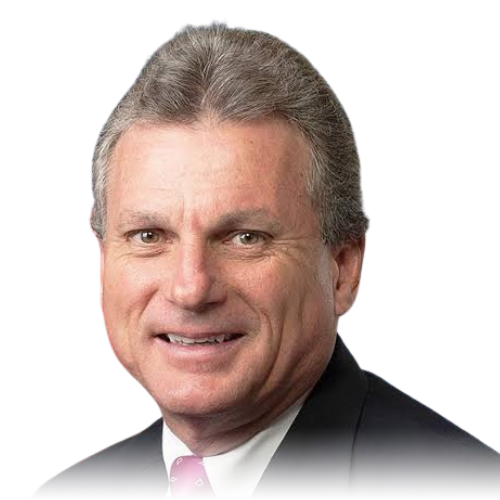
Buddy Carter
Congressman
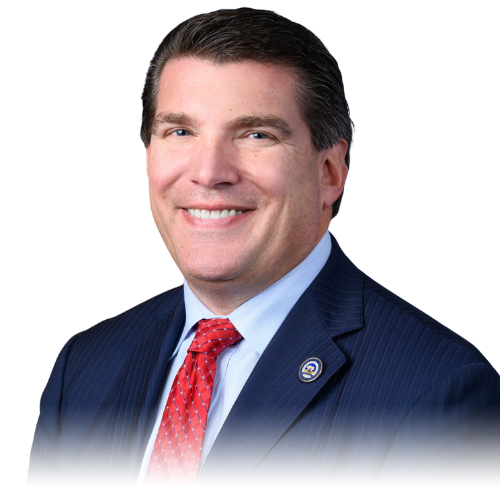
Jay Obernolte
Congressman

Jeff DeCoux
Chair,
Autonomy Institute

David Knight
CEO, Terbine

Stephen Rose
CEO, Render Networks